Deep cleaning can make you feel productive fast. That is often when mistakes happen.
One spray is not shifting the grime, so another gets added. A toilet cleaner is followed by bleach. A drain product goes down first, then something acidic goes in after it. The labels may look familiar, but the chemistry is not harmless just because the bottles are sold in supermarkets.
In the UK, household safety guidance is clear on this point: mixing cleaning products can create dangerous fumes, trigger corrosive reactions, and cause serious harm to the eyes, skin, and lungs. London Fire Brigade said in January 2025 that it had responded to more than 150 incidents involving dangerous reactions from cleaning chemicals since 2023, and UK toxicology guidance notes that chlorine gas exposure from inappropriate mixing of domestic products is relatively common.
At VIP Cleaning, this is one of the simplest rules we follow and one of the most important. Use the right product for the job, one at a time, and never try to “boost” a cleaner by mixing it with something else.
Table of Contents
Why mixing cleaning products is so dangerous
Most unsafe mixtures fall into one of three categories:
- they release a toxic gas
- they create a corrosive reaction
- they generate heat, splashing, or violent foaming
That is why the risk is not just “the smell is a bit strong”. The risk is breathing in irritant gas, getting chemical burns, or creating a reaction in a confined space like a toilet bowl, shower cubicle, or sink.
NHS guidance lists bleach, toilet cleaners, oven cleaners, drain cleaners, detergents, and ammonia among household chemicals that can cause chemical burns. HSE also warns that some cleaning products are corrosive and can cause skin burns, eye damage, allergies, and asthma.
The golden rule
Never mix two cleaning products unless the manufacturer explicitly states that they are designed to be used together.
That includes:
- pouring one product on top of another
- spraying different products onto the same surface without rinsing
- topping up old spray bottles with a different cleaner
- mixing homemade solutions with shop-bought chemicals
- adding bleach “for extra strength”
This is where many accidents happen. People do not always mix products in a bowl. Often, they mix them by layering products in the same toilet, sink, drain, mop bucket, or cloth.
The never mix list
1. Bleach and limescale remover
This is one of the most dangerous household combinations.
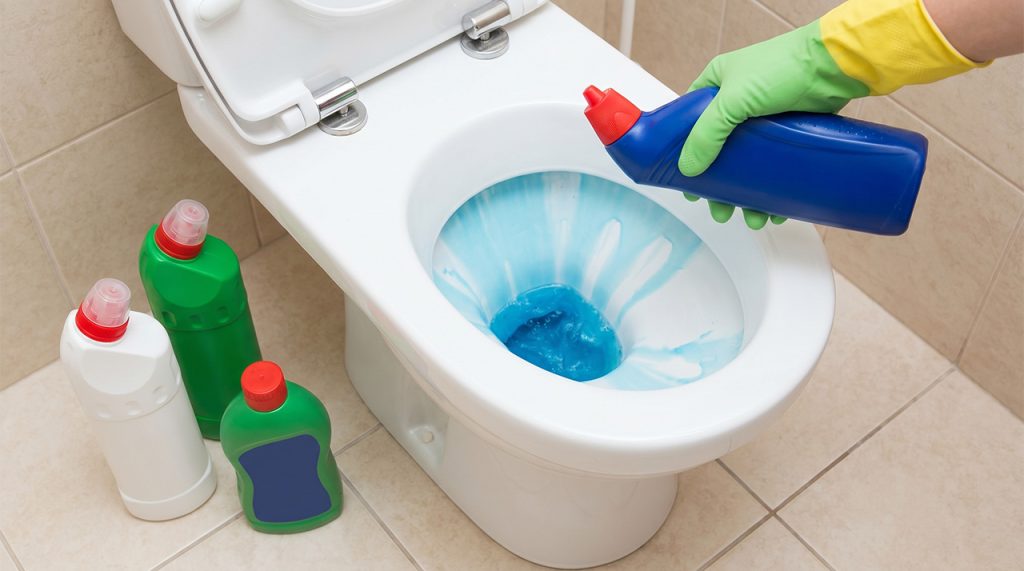
Limescale removers are usually acidic. Bleach contains sodium hypochlorite. When bleach is mixed with an acid, it can release chlorine gas. UK toxicology guidance states that acidifying sodium hypochlorite liberates chlorine gas, and London Fire Brigade has specifically warned about bleach being mixed with limescale remover after real incidents.
Why people mix it
Usually because they want to tackle toilet stains, hard water marks, and discolouration all at once.
What can happen
- choking fumes
- coughing
- throat and chest irritation
- burning eyes
- shortness of breath
Common real-life example
Someone applies limescale remover around the toilet bowl, decides it still looks stained, and follows with bleach before flushing or rinsing properly.
What to do instead
Use one product first. Rinse thoroughly. Ventilate the room. Only then use a second product if it is actually needed.
2. Bleach and toilet cleaner
This is closely related to the first example, but worth separating because many toilet cleaners contain acids or other reactive ingredients.
The danger is the same: bleach plus an acidic toilet cleaner can release chlorine gas. NHS guidance includes toilet cleaners among household products that can cause chemical burns, and official UK toxicology guidance warns that bleach mixed with acidic cleaning agents liberates chlorine gas.
Why this mix is common
People often think bleach disinfects while toilet cleaner removes scale, so using both together seems logical.
The problem
The chemistry can turn a toilet bowl into a small gas chamber, especially with the lid down and the bathroom door shut.
Safer approach
Choose the product based on the problem:
- limescale needs a descaler
- hygiene may need bleach or a disinfectant
- stains do not always need both
3. Bleach and ammonia
This is another classic dangerous mixture.
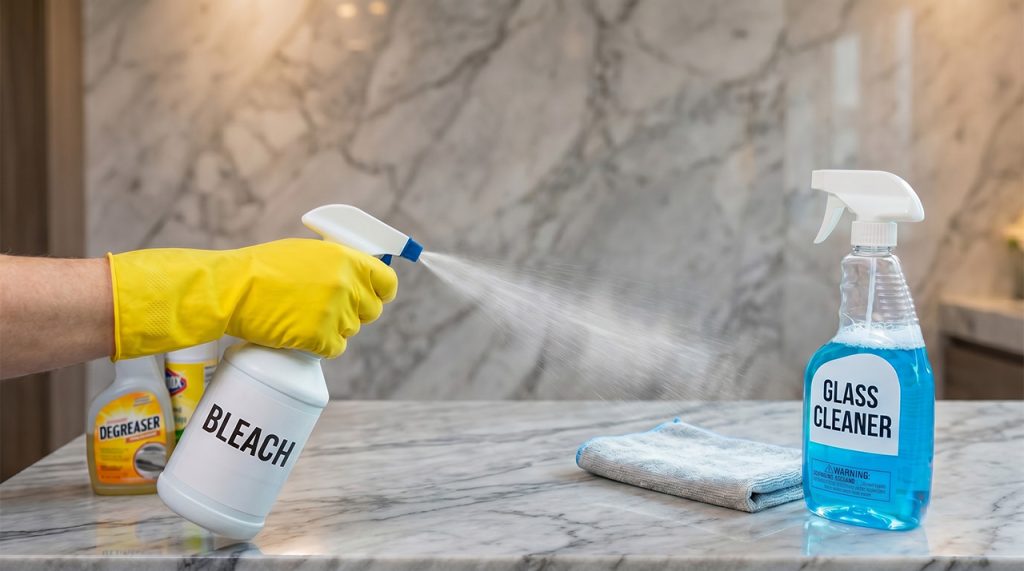
UK toxicology guidance states that mixing sodium hypochlorite with ammonia-based solutions gives rise to chloramine compounds. These fumes are harmful and can irritate the lungs, eyes, and throat.
Where ammonia may be found
- some glass and window cleaners
- some kitchen degreasers
- some floor products
- older or industrial-style cleaning formulas
Why people mix it
Often by accident. A glass cleaner is used on a surface, then bleach is sprayed on top.
Symptoms may include
- coughing
- wheezing
- watery eyes
- nausea
- breathing difficulty
Important note
You do not need to pour bleach and ammonia into a bucket for this to happen. Residue on a surface can be enough to create a problem.
4. Bleach and drain cleaner
This is especially risky because drain cleaners are already aggressive products.
Some drain products contain acids. Others contain alkalis. Some create heat as they work. Adding bleach into that mix can produce harmful gases or intensify a dangerous reaction. NHS guidance specifically includes drain cleaners among household chemicals that can cause burns, and UK warnings in 2025 and 2026 highlighted bleach and drain unblockers as combinations people should never mix.
Why people do it
Because the drain still smells bad or still feels blocked after one product has been used.
Why it is dangerous
- fumes can rise directly from the plughole
- splash risk is high
- enclosed sinks and small bathrooms trap vapours
- the remaining drain product may still be active when the second one is added
Safer approach
Follow the product instructions exactly. If a drain cleaner has been used and has not worked, do not improvise with a second chemical.
5. Bleach and vinegar
This is one of the most misunderstood mixtures because vinegar is seen as harmless.
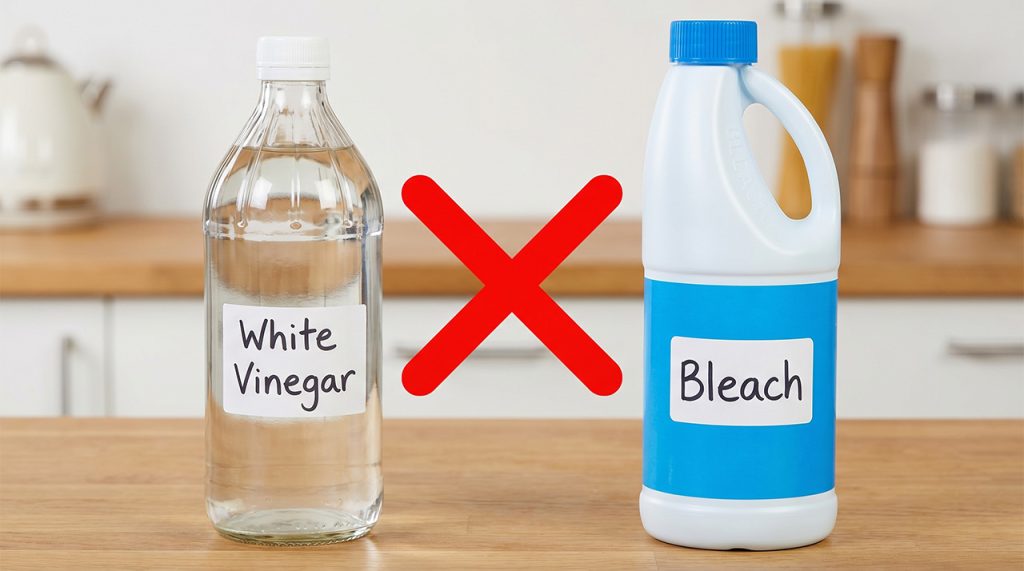
Vinegar on its own is widely used in cleaning. The problem starts when it is mixed with bleach. Because vinegar is acidic, it can trigger chlorine gas release from bleach. UK toxicology guidance is explicit that bleach releases chlorine gas when acidified.
Why people think it is safe
Because both products are common in “natural cleaning” advice and each can be useful separately.
Why it is not safe
Natural does not mean compatible. Acid is still acid.
Safer approach
Use vinegar for descaling or glass cleaning. Use bleach separately for tasks where a bleach product is genuinely needed. Never combine them.
6. Bleach and lemon juice or other acidic homemade cleaners
The same warning applies here.
Lemon juice, citric acid solutions, and homemade acidic descalers can all react badly with bleach because the issue is the acidity, not just the brand name on the bottle.
Examples people may not realise are risky
- bleach plus lemon juice in a sink
- bleach plus citric acid toilet cleaner
- bleach plus homemade descaler
- bleach added to vinegar-based floor solution
The reason
Acids can cause bleach to release dangerous chlorine fumes.
7. Hydrogen peroxide and vinegar
This one is less widely known but still worth including.
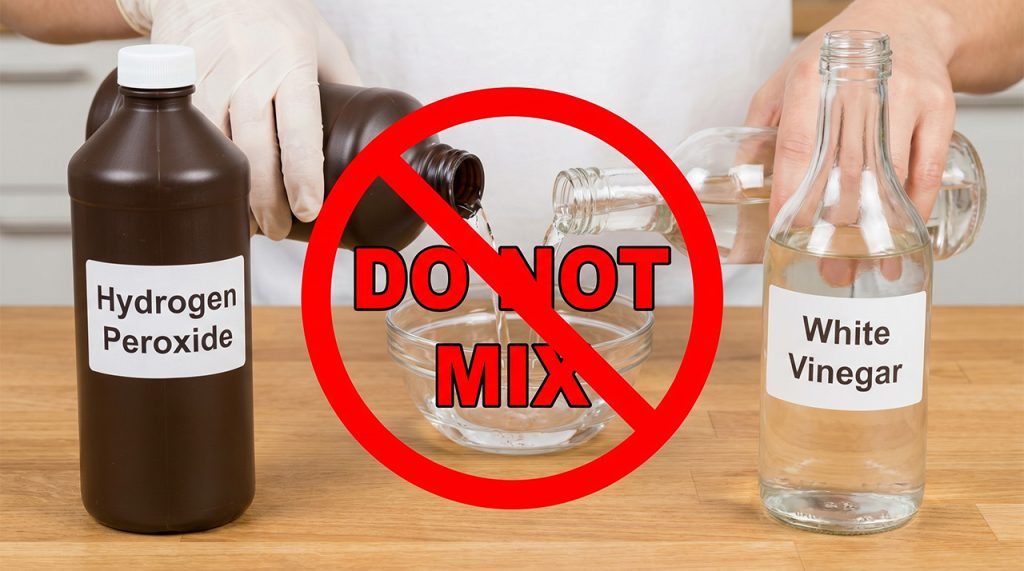
Hydrogen peroxide and vinegar should not be mixed together in the same container. When combined directly, they can form peracetic acid, which is irritating and corrosive.
Why people try it
Because both are sometimes promoted online as “safer” cleaning alternatives.
Why that is misleading
A safer product used incorrectly is still unsafe.
Better approach
If you use either product for household cleaning, use them separately and rinse between uses. Do not combine them in a bottle.
8. Different drain cleaners together
This is a high-risk mistake because one drain cleaner may be acidic and another may be strongly alkaline.
Mixing them can create violent reactions, splashes, heat, or dangerous fumes. HSE guidance for workplaces specifically includes drain-cleaning products among hazardous substances that need careful handling, and NHS guidance lists drain cleaners as chemicals capable of causing burns.
Common example
A homeowner uses one unblocker, waits, gets impatient, and pours in another brand or a second product type.
Why it is especially dangerous
You often cannot see what is happening inside the pipework, but the reaction can come back up towards you.
Rule to follow
Never use a second drain product unless the first has been fully cleared according to the manufacturer’s instructions.
9. Oven cleaner and anything else
Oven cleaners are often highly alkaline and can be corrosive.
Because of that, they should be treated as specialist products, not mixed with degreasers, sprays, bleach, or homemade acidic cleaners. NHS guidance includes oven cleaners among household products capable of causing chemical burns.
Why people mix
Because baked-on grease feels stubborn, and adding another product seems like a shortcut.
Why that goes wrong
The first product may already be chemically aggressive enough. A second chemical adds risk, not necessarily better results.
Better approach
Use the oven cleaner alone, exactly as directed, with gloves and ventilation.
10. Toilet unblocker and toilet cleaner
This is a particularly bad idea because both can be highly reactive and the toilet bowl holds fumes close to face level.
Why it happens
A blocked toilet is stressful. People want to clear the blockage, remove odour, and disinfect quickly.
Why it is dangerous
- splash-back risk
- fumes trapped in the bowl
- possible reaction between acidic cleaner and alkaline unblocker
- serious eye and skin injury risk
Safer alternative
Use one product only. If the blockage persists, switch from chemicals to a mechanical solution or professional help.
11. Mould remover and other bathroom cleaners
Many mould removers contain bleach or bleach-type ingredients.
That means they should not be layered with limescale removers, shower cleaners, vinegar sprays, or toilet cleaners unless the label explicitly says it is safe.
Why people do it
Bathrooms often have multiple problems at once:
- mould
- soap scum
- hard water marks
- odours
Why this matters
The more products you apply to the same shower, tile, or grout line, the easier it is to create an accidental reaction.
Safer approach
Tackle one problem at a time. Rinse fully before changing products.
12. Glass cleaner and bleach
Some glass cleaners may contain ammonia or other solvents.
That means mixing or layering them with bleach can create harmful fumes. UK toxicology guidance specifically warns that bleach mixed with ammonia-based solutions gives rise to chloramine compounds. ([GOV.UK][3])
Example
A mirror is cleaned with a window spray. Then nearby bathroom tiles are sprayed with bleach mist. Residue and overspray mix in the air and on surfaces.
Better method
Use separate cloths and separate stages. Clean glass first, rinse if needed, then move to another product.
13. Multiple descalers or acidic products together
Not every dangerous mix involves bleach.
Combining several acidic products can still intensify fumes, increase splashing, and create a more corrosive solution than expected.
Examples
- limescale remover plus toilet descaler
- citric acid cleaner plus bathroom acid gel
- kettle descaler repurposed for another job and mixed with spray cleaner
The issue
Even if a mixture does not create a named toxic gas, it can still cause burns, eye injury, or harsh inhalation exposure.
14. Homemade cleaners and shop-bought chemicals
This is where good intentions often go wrong.
Homemade cleaners are often presented online as simple and safe, but they should never be mixed casually with commercial products.
Common risky examples
- vinegar spray mixed with bleach
- citric acid plus mould remover
- essential oil blends added to strong chemical cleaners
- bicarbonate mixtures poured into a drain after drain cleaner
Why it happens
People assume a homemade mix is mild, so it will “balance out” or help the stronger product.
The reality
Compatibility matters more than branding. Homemade does not mean safe to combine.
What symptoms suggest a dangerous chemical reaction
Stop cleaning immediately if you notice:
- sudden strong fumes
- coughing fits
- burning eyes
- tight chest
- wheezing
- dizziness
- throat irritation
- nausea
- chemical smell that becomes overwhelming fast
These signs may mean you are breathing in irritant gas or vapour.
What to do if you accidentally mix cleaning products
If you think you have mixed products unsafely:
- Stop immediately
- Move away from the area
- Open windows and doors if you can do so safely
- Do not lean over the toilet, sink, or bucket to inspect it
- Avoid breathing the fumes
- If product is on your skin or in your eyes, rinse with plenty of water
- Seek medical help urgently if symptoms are severe
NHS guidance says chemical burns need prompt treatment and advises rinsing the affected area with as much clean water as possible for at least 20 minutes if safe to do so.
The combinations people assume are safe, but are not
A lot of dangerous mixtures happen because the products do not feel dangerous.
Here are some examples people often underestimate:
- bleach and vinegar
- bleach and lemon juice
- bleach and toilet cleaner
- bleach and mould spray from another brand
- one drain cleaner followed by another
- DIY descaler followed by bleach
- glass cleaner used before bleach on the same surface
The lesson is simple. Familiarity is not safety.
The safest way to clean stubborn areas
When a surface looks bad, the urge is to throw more chemistry at it. A better method is:
- identify the main problem first
- choose one product designed for that problem
- follow the label exactly
- allow proper dwell time
- rinse thoroughly
- ventilate the room
- only then decide if a second stage is really needed
That is how professional cleaners reduce risk. Not by mixing products, but by using the right one properly.
When to be extra careful
Some situations make reactions more dangerous:
- small bathrooms with poor ventilation
- enclosed shower cubicles
- blocked drains
- deep toilet cleaning
- working at face level over bowls and sinks
- households with children nearby
- homes where products are decanted into unlabelled bottles
In these settings, even a “small” mistake can become serious quickly.
A simple rule for every cleaning cupboard
If you remember one line from this guide, make it this:
Never mix bleach with anything except water, and never mix any two strong cleaners unless the label explicitly says you can.
That rule alone prevents most of the worst household cleaning accidents.
Final thoughts
A lot of cleaning advice focuses on better results. Not enough focus on safer habits.
The truth is that mixing products rarely makes cleaning more effective. More often, it makes the air unsafe, the surface risky to handle, and the situation harder to control. UK fire, health, and workplace safety guidance all point in the same direction: strong cleaning chemicals need careful handling, good ventilation, and clear separation from one another.
Good cleaning is not about using the most products. It is about using the right product, in the right place, in the right way.