
One of the methods I use, and one I teach my team, is very simple.
Instead of relying only on regular window cleaner, we often use warm water with one tiny drop of washing-up liquid.
People are sometimes surprised by that, but honestly, in many situations, this works better than most window spray products. It makes sense when you think about what washing-up liquid is designed to do. It cuts through grease. It helps lift oily residue. It breaks down the kind of film that builds up on glass from fingerprints, cooking, dust, moisture, and everyday living.
Inside windows can collect much more grime than people realise. In kitchens, there can be a light greasy film from cooking. In living rooms and bedrooms, there can be fingerprints, dust, condensation marks, and residue from the air. In bathrooms, moisture can leave marks and encourage mould around the seals.
A tiny drop of washing-up liquid helps loosen that dirt so it can be removed properly instead of just moved around.
The important words here are “one tiny drop”.
You do not need a bucket full of bubbles. Too much washing-up liquid can leave residue, and residue can cause streaks. The aim is not to cover the window in foam. The aim is to use just enough to break down the dirt, then remove it properly with a clean squeegee, clean microfibre cloths, and a final polishing cloth.
You can follow along in my Reel on Instagram.
This is one of those cleaning methods that is simple, affordable, and effective when done correctly.
Why Most Windows End Up Streaky
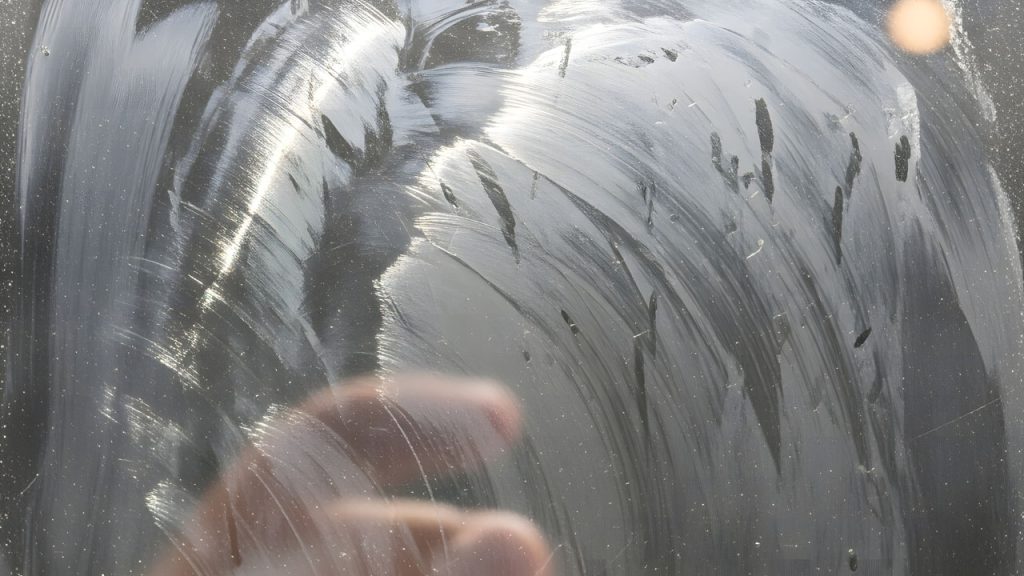
Window cleaning looks like one of the easiest jobs in the house, but it is one of the easiest to get wrong.
Many people use a regular window cleaner, spray too much product onto the glass, then wipe it around with a cloth that is already holding dust, grease, or old cleaning product. Instead of removing the dirt, they are spreading it across the surface.
That is when streaks appear.
Another common mistake is trying to polish the window before the glass has been properly washed. If there is grease, fingerprints, cooking residue, dust, or condensation marks on the window, a quick spray and wipe will not always be enough. The glass may look clean for a few minutes, but once the light hits it from the right angle, the smears show up again.
Direct sunlight can make this worse because cleaning product dries too quickly on the glass. When it dries before you have removed it properly, it can leave marks behind.
Dirty cloths also cause problems. I always say that you cannot get a clean result with dirty tools. If the cloth has already been used on another surface, or if it has old detergent in it, the window will not finish properly.
This is why professional cleaning is not only about the product. It is about the method.
My Simple Window Cleaning Hack: Dish Soap
One of the methods I use, and one I teach my team, is very simple.
Instead of relying only on regular window cleaner, we often use a small amount of dish soap in water.
People are sometimes surprised by that, but it makes sense when you think about what dish soap is designed to do. It cuts through grease. It helps lift oily residue. It breaks down the kind of film that builds up on glass from fingerprints, cooking, dust, moisture, and everyday living.
Inside windows can collect much more grime than people realise. In kitchens, there can be a light greasy film from cooking. In living rooms and bedrooms, there can be fingerprints, dust, condensation marks, and residue from the air. In bathrooms, moisture can leave marks and encourage mould around the seals.
A small amount of dish soap helps loosen that dirt so it can be removed properly instead of just moved around.
The important phrase here is “a small amount”.
You do not need a bucket full of bubbles. Too much dish soap can leave residue, and residue can cause streaks. The aim is not to cover the window in foam. The aim is to use enough to break down the dirt, then remove it properly with clean water, a clean cloth, or a squeegee.
This is one of those cleaning methods that is simple, affordable, and effective when done correctly.
How I Clean Window Glass Properly
The correct method starts before the glass is even washed.
First, I clean the frames. This is one of my non-negotiables, and it is probably the mistake most people do not even realise they are making.
If you clean the glass first and leave dust, old grime, insects, or oily residue sitting in the frame, that dirt can go straight back onto the glass. Then people wonder why their windows still look smeary, even after they have cleaned them.
Once the frame is clean, I remove any loose dust and dirt from around the window area. If you start washing straight away, dry dust can mix with water and create muddy smears around the frame and edges.
Then I use warm water with one tiny drop of washing-up liquid. Warm water helps loosen dirt, and the washing-up liquid helps break down grease and fingerprints.
The glass should be washed properly, not just sprayed in the middle. I pay attention to the corners and edges because that is where dirt often collects. A window can look clean in the centre but still have grime sitting around the outside of the pane.
After washing, the dirty water needs to be removed with a proper squeegee. This is what gives that professional, streak-free finish. If dirty water is left to dry on the glass, streaks and marks will appear again.
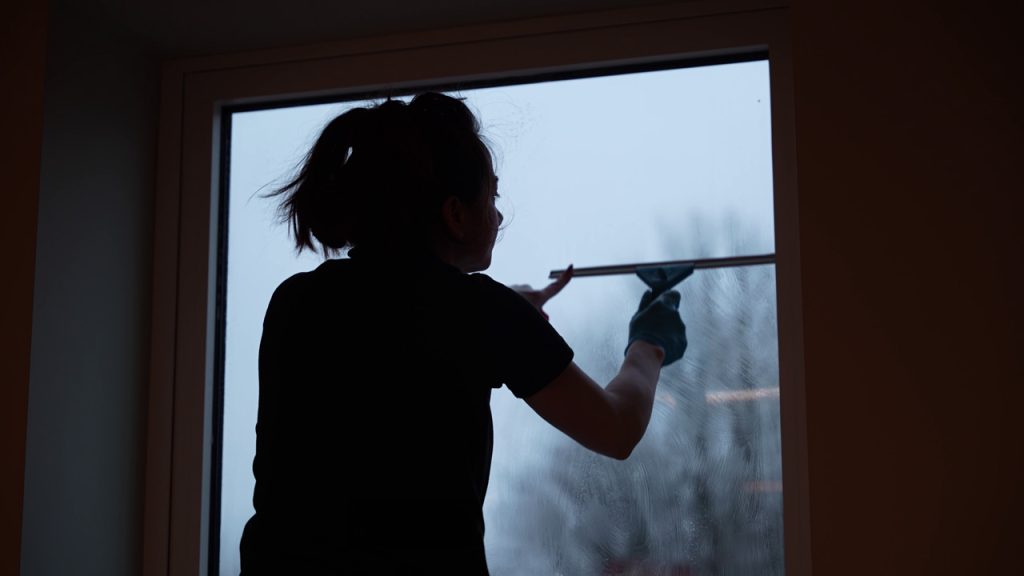
Clean microfibre cloths are also essential. Dirty cloths just move grease and dirt around the glass, so I always make sure the cloths used on windows are fresh and suitable for the job.
Finally, I use a glass polishing cloth for the final touch. This is what helps the window look crystal clear, especially when the light catches the glass.
The final polish should be light. If the window has been washed, squeegeed, and dried properly, you should not need to fight with the glass for ten minutes.
That is usually a sign that something went wrong earlier in the process.
The Part Most People Forget: The Window Frame
This is where I think the difference between a quick wipe and a proper clean becomes very clear.
Most people clean the glass and ignore the frame.
But the window frame can hold a lot of dirt. Dust settles there. Moisture collects there. Dead insects, old grime, and residue can sit in the corners. In some windows, lubrication oil from the mechanism mixes with dust and creates a sticky build-up inside the frame.
That sticky dirt does not always come away with a quick wipe.
This is why I instruct my team to clean the inside of the window frame as a bonus detail whenever possible. It is one of those areas that customers may not notice immediately, but they feel the difference when the job is done properly.
It is also one of the biggest reasons windows become smeary again after cleaning. If the frame is dirty, that dirt can easily transfer back onto the glass. That is why, for me, cleaning the frames first is non-negotiable.
A clean frame makes the whole window look better. It also stops dirt from undoing the work you have just done on the glass.
In my opinion, if the glass is clean but the frame is dirty, the window is only half cleaned.
Cleaning Black Mould Around the Rubber Seal
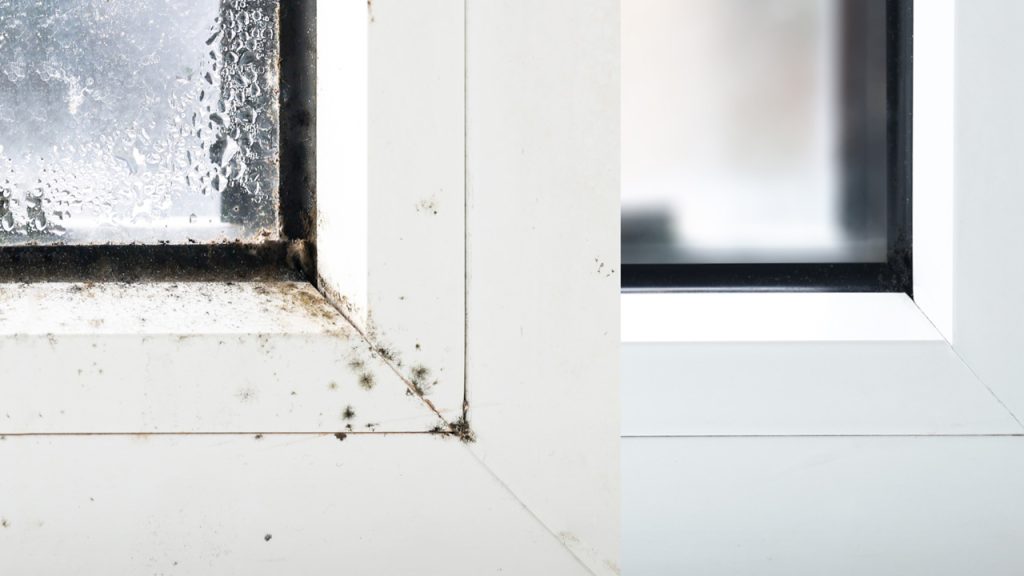
Another area that many people miss is the black mould that can build up where the glass meets the rubber seal of the frame.
This is very common, especially in rooms with condensation, moisture, or poor ventilation. You often see it along the bottom edge of the window, in the corners, or around the seal where water tends to sit.
People usually focus on the middle of the glass, so this mould can stay there for a long time without being properly cleaned.
At VIP Cleaning, my team is instructed to check this area and clean the black mould build-up where possible. It needs to be done carefully because the rubber seal should not be damaged. Harsh scrubbing or the wrong product can cause problems, especially on older windows.
The goal is to remove the visible build-up and leave the window looking fresher and better maintained.
This is another reason why window cleaning is not just about streaks. A streak-free pane of glass can still look unpleasant if there is black mould sitting around the seal.
Streak-Free Is Not the Same as Properly Clean
This is one of the biggest lessons I have learned through years of cleaning.
A streak-free window is not always a properly cleaned window.
Of course, streak-free glass matters. Nobody wants cloudy marks, smears, or lines across the pane. But if the frame is dusty, the rubber seal has black mould, the edges are dirty, and the outside glass is covered in rain marks, the job is not really finished.
A properly cleaned window should include:
- Clear glass
- Clean edges
- A wiped internal frame
- Attention to the sill
- Cleaned rubber seals where possible
- Removed dust and sticky residue
- Outside cleaning where access is safe and practical
That is the difference between making a window look slightly better and cleaning it properly.
For me, good cleaning has always been about detail. The areas people forget are often the areas that make the biggest difference.
Common Window Cleaning Mistakes I See
Over the years, I have seen the same window cleaning mistakes again and again.
The first is using too much product. More product does not mean a better clean. In fact, too much cleaner can leave residue on the glass, which then creates more streaks. For most everyday window cleaning, warm water with one tiny drop of washing-up liquid is often enough.
The second is using dirty cloths. A cloth that has been used on a dusty surface, greasy worktop, or bathroom area should not be used to finish glass. Dirty cloths just move grease and dirt around the window instead of removing it.
Another mistake is not using the right tools. A proper squeegee makes a big difference if you want that professional streak-free finish. A clean microfibre cloth helps with the edges, and a glass polishing cloth gives the final crystal-clear result.
People also clean in strong direct sunlight. The glass heats up, the product dries too quickly, and streaks appear before you have had time to remove the residue properly.
But one of the biggest mistakes is forgetting the frames. Many people clean the glass first, then dirt from the frame goes straight back onto the window. This is why I always say: clean the frames first.
People also forget the edges. They clean the centre of the glass but leave dirt around the sides and bottom. Then, when condensation appears or the window is opened, that dirt spreads again.
Another mistake is not changing the water. If the water is already dirty, you are not cleaning the window anymore. You are washing it with dirt.
Finally, many people forget to dry the bottom edge and seal area. Leaving moisture there can lead to more marks and can make mould build-up worse over time.
My Professional Window Cleaning Standard at VIP Cleaning
At VIP Cleaning, I do not want my team to simply spray the glass, wipe the middle, and walk away.
That is not our standard.

The method I teach is more complete. We clean the frames first, because otherwise dirt from the frames can go straight back onto the glass. We use warm water with one tiny drop of washing-up liquid where it helps break down grease and grime. We use a proper squeegee for that professional streak-free finish. We use clean microfibre cloths, because dirty cloths only move dirt around. And we finish with a glass polishing cloth when the window needs that final crystal-clear touch.
We also clean the outside where it is safe and possible. We pay attention to the inside of the window frame. We look for black mould around the rubber seal. We clean the details that many people miss.
This is what makes the result feel professional.
It is not about making the job complicated. It is about doing the simple things properly.
Anyone can wipe a window. But proper window cleaning requires patience, clean tools, the right method, and attention to the whole window, not just the centre of the glass.
That is what I want customers to notice when VIP Cleaning has finished a job: not only that the windows are clearer, but that the whole area feels cleaner and better cared for.
Final Thoughts
Clean windows can completely change the feeling of a room.
They let in more light. They make the space feel fresher. They help a home or workplace feel properly maintained.
But the correct way to clean windows is not just about chasing a streak-free finish. Streaks are only one part of the job.
For me, a properly cleaned window means clean glass, clean edges, clean frames, attention to the rubber seals, and outside cleaning where possible. It means removing the dirt people see, but also dealing with the dirt they often forget.
After years in cleaning, that is the lesson I come back to again and again.
Good cleaning is always in the details.
And windows are one of the best examples of that.